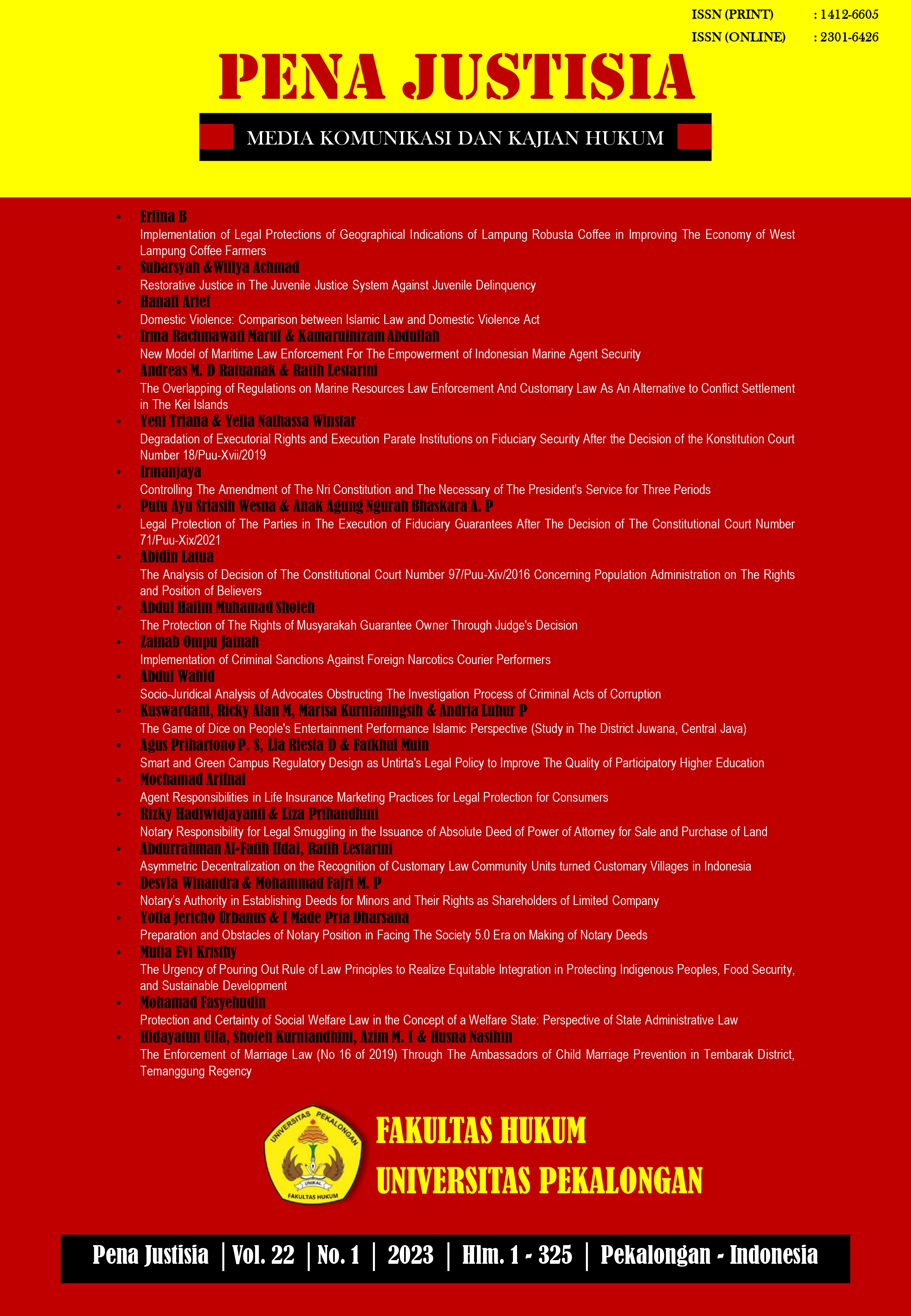
Controlling The Amendment Of The Nri Constitution And The Necessary Of The President's Service For Three Periods
DOI:
https://doi.org/10.31941/pj.v22i1.2532Abstract
The constitution in Indonesia has undergone several changes since Indonesia's independence. In this dynamic, Indonesia is in the phase of finding its identity and the right government system in accordance with the conditions of the Indonesian nation. Changes to the constitution repeatedly, namely in the Post-Independence period, the 1945 KRIS, the 1950 Constitution, the New Order, the Old Order, and the Reformation. Article 7 of the 1945 Constitution of the Republic of Indonesia states that the President governs for a term of five years and can be re-elected in the election of the head of state. However, until the New Order era, the presidential term limit was not determined. Resulting in abuse of power and political chaos. The post-amendment reform era changed Article 7 by limiting the president's power to only two terms. The amendment to Article 7 is referred to as the embodiment of reform and is in accordance with the opinion of the Indonesian people so that power regeneration can occur. The discourse on the third amendment in Article 7 is pro and contra because it is planned that there will be a change in the limitation of the presidential term of office to three periods. This discourse is not in accordance with the spirit of Article 7 of the 1945 Constitution of the Republic of Indonesia and the controversy among the Indonesian people. The Indonesian people hope that the abuse of power will not repeat itself as in the pre-reform era and stick to the mandate of Article 7 of the 1945 Constitution of the Republic of Indonesia that the president is limited to two terms.Downloads
References
Aryani, N. M., & Hermanto, B. (2018). Rekonstruksi Kejelasan Kedudukan Wakil Presiden dalam Kerangka Penguatan dan Penegasan Sistem Presidensiil Indonesia. Jurnal Legislasi Indonesia, 15, 91–101.
Azed, A. B. (2017). Mewujudkan Sistem Presidensial Murni Di Indonesia* Sebuah Gagasan Penyempurnaan Sistem Ketatanegaraan Indonesia. Legalitas: Jurnal Hukum, 5(2), 44–78.
Efriza, N. (2018). Sistem Presidensial Dan Pengelolaan Koalisi, Berdasarkan Tiga Tahun Pemerintahan Presiden Joko Widodo [Presidential Systems And Management Of Coalitions, Based On Three Years Of Government President Joko Widodo]. Jurnal Politica Dinamika Masalah Politik Dalam Negeri Dan Hubungan Internasional, 9(1), 1–16.
Kusnadi, K. (2020). Mahkamah Konstitusi Dan Upaya Menegakkan Asas Presidensialisme Di Indonesia. Refleksi Hukum: Jurnal Ilmu Hukum, 5(1), 1–20.
Luthfy, R. M. (2019). Masa Jabatan Kepala Negara Dalam Perspektif Konstitusi. Masalah-Masalah Hukum, 48(4), 319–330.
Mugeni, M. (2015). Pergeseran Kekuasaan Presiden Dan Penguatan Kekuasaan Dpr Pasca Perubahan UUD NRI 1945. Refleksi Hukum: Jurnal Ilmu Hukum, 9(2), 143–158.
Pahlawan, J., Salama, N., & Ulfah, S. (2020). Pembatasan Masa Jabatan Presiden Di Indonesia. Jurnal Rechten: Riset Hukum Dan Hak Asasi Manusia, 2(2), 10–19.
Panggabean, N. (2022). Pro Dan Kontra Pada Sistem Pemerintahan Negara Kesatuan Republik Indonesia Untuk Menambah Masa Jabatan Presiden Menjadi 3 Periode. Jurnal Revolusi Indonesia, 2(5), 476–483.
Roza, D. (2021). Prospek Amandemen Undang-Undang Dasar Negara Ri Tahun 1945 Terkait Masa Jabatan Presiden Perspektif Pada Pemilu 2024. UNES Law Review, 4(2), 207–217.
Siboy, A. (2021). Implikasi Pola Koalisi Partai Politik terhadap Dinamika Penyelenggaraan Pemilihan Presiden Indonesia. Perspektif Hukum, 36–58.
Supardi, S. (2018). Optimalisasi Jabatan Wakil Presiden Menurut Undang-Undang Dasar 1945 Pasca-Amandemen. Ijtihad, 34(2), 161–176.
Yusa, I. G., & Hermanto, B. (2017). Gagasan Rancangan Undang-Undang Lembaga Kepresidenan: Cerminan Penegasan Dan Penguatan Sistem Presidensiil Indonesia. Jurnal Legislasi Indonesia, 14(03), 313–324.
Downloads
Published
Issue
Section
License
Copyright (c) 2023 Irmanjaya Irmanjaya

This work is licensed under a Creative Commons Attribution 4.0 International License.